
Jehovah’s Witnesses
and Disfellowshipping
Reference Material
2022
Back to Top
Table of Contents
A. INTRODUCTION
Opening Comments
Brochure on Jehovah’s Witnesses and Disfellowshipping (Brochure prepared by Jehovah’s Witnesses for
meetings with government officials and academics)
1. Definitions
a. Disfellowshipping
Do Jehovah’s Witnesses Shun Those Who Used to Belong to Their Religion?—jw.org-FAQ
b. Disassociation
Organized to Do Jehovah’s Will, chapter 14, paragraphs 30-33
Can a Person Resign From Being One of Jehovah’s Witnesses—jw.org-FAQ
c. Inactivity
Can a Person Resign From Being One of Jehovah’s Witnesses?—jw.org-FAQ
B. VIEW OF JEHOVAH’S WITNESSES
Jehovah’s Witnesses—Proclaimers of God’s Kingdom, pages186-187
Why Disfellowshipping Is a Loving Provision – The Watchtower, April 2015, pages 29-31
1. Purposes of Disfellowshipping
a. We Serve the God Who Is “Rich in Mercy” – The Watchtower, October 2021, page 10, paragraph 9
b. How to Remain in God’s Love, chapter 3, paragraph 20
2. Procedure for Disfellowshipping
a. Organized to Do Jehovah’s Will, chapter 14, paragraphs 21, 25-29
C. COMMENTS BY ACADEMICS
1. Jehovah’s Witnesses and Disfellowshipping (After studying the Bible-based disfellowshipping practice of
Jehovah’s Witnesses, several scholars disprove some clichés and explain why the practice should be respected.
See synopsis for details)
Synopsis: Jehovah’s Witnesses and Disfellowshipping – An Introduction
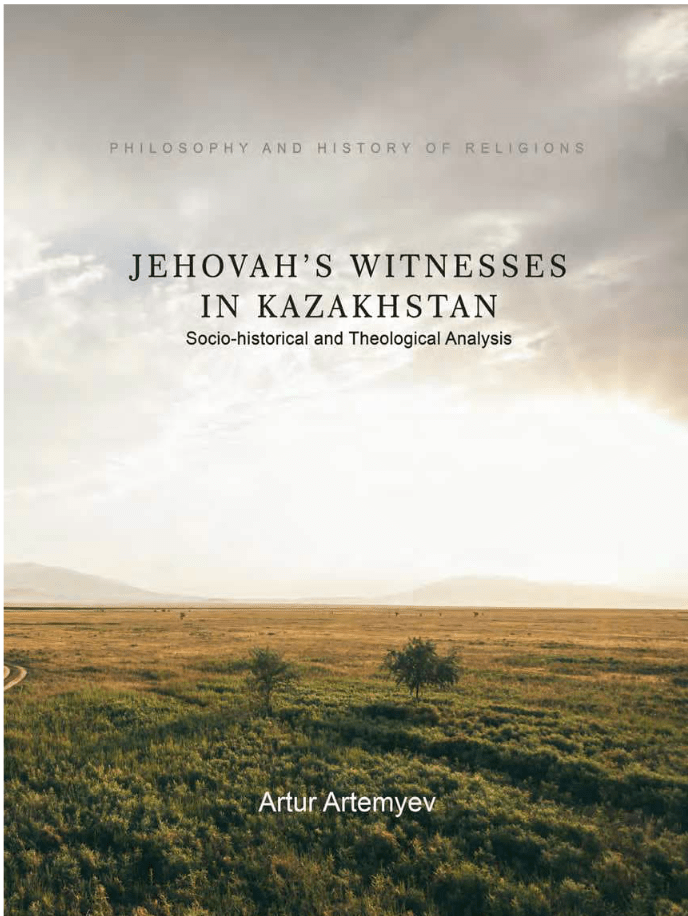
a. 2021 – Jehovah’s Witnesses in Kazakhstan – Socio-historical and Theological Analysis – Third revised
and enlarged edition, Almaty—Artur Artemyev
b. 2021-02-02 – The Journal of CESNUR—Dangerous Freedoms: Jehovah’s Witnesses, Religious Liberty,
and the Questions of Sexual Abusers and Disfellowshipped Ex-Members—Massimo Introvigne
c. 2021-04-12 – Bitter Winter—The Ghent Case Against the Jehovah’s Witnesses: A Chronology—Willy
Fautré
d. 2021-04-13 – Bitter Winter—Jehovah’s Witnesses: How the Ghent Decision Subverted the Idea of
Liberty—Massimo Introvigne
e. 2021-04-20 – Bitter Winter—Jehovah’s Witnesses: Disfellowshipping, Shunning, and the Ghent Ruling—
George Chryssides
f. 2021-04-21 – Bitter Winter—The Ghent Jehovah’s Witness Decision: Anomaly or a New Reality?—James
Richardson
g. 2021-04-23 – Bitter Winter—Excommunication: Looking for a Balance of Interests Between Opposite
Freedoms—Yannick Thiels
h. 2020-09-03 – The New Gnomes of Zurich—The Jehovah’s Witnesses, the Spiess Case, and its
Manipulation by Anti-Cult and Russian Propaganda—Jehovah’s Witnesses White Paper (cesnur.org)—
Massimo Introvigne, Alessandro Amicarelli
i. 2009 – Excommunication: A Controversial Religious Freedom—Yannick Thiels
Back to Top
j. 2003 – The New Inquisitors—Besier Besier
2. Estrangement and Isolation in Society (“Estrangement” is a common phenomenon in society and happens
for many reasons, both religious and non-religious)
Synopsis: Estrangement and Isolation in Society – An Introduction
a. 2021-08-02 – Journal of Marriage and Family—Adult children’s estrangement from parents in
Germany—Oliver Arránz Becker | Karsten Hank
b. 2021-12-01 – BBC Family Trees Series—Family estrangement: Why adults are cutting off their parents—
Maddy Savage
c. 2021-10-14 – The Conversation—What is family estrangement? A relationship expert describes the
problem and research agenda—Kristina Scharp
d. 2020 May – University of Cambridge Centre for Family Research—Stand Alone—Family Estrangement
and the COVID-19 Crisis—Lucy Blake
e. 2020-02-12 – Social Capital Research—Social sanctions – overview, meaning, examples, types and
importance—Tristan Claridge
f. 2019-09-18 – Broadview—Family estrangement a ‘silent epidemic’—Lauren Sproule
g. 2017-12-20 – The New York Times—Debunking Myths About Estrangement—Catherine Saint Louis
h. 2017 December – Journal of Family Theory & Review 9—Parents and Children Who Are Estranged in
Adulthood: A Review and Discussion of the Literature—Lucy Blake
i. 2015 – University of Cambridge Centre for Family Research—Hidden Voices—Family Estrangement in
Adulthood—Lucy Blake
j. 2014 – Stand Alone—The Prevalence of Family Estrangement—Becca Bland
D. COURT DECISIONS (Courts in many countries have consistently held that the disfellowshipping and shunning
practices of Jehovah’s Witnesses are lawful)
1. Belgium
a. 2018-01-15 – Court of Appeal of Brussels – Belgium—JL v CCJW
b. 2012-01-10 – Court of Appeal of Mons – Belgium—JL v CCJW
2. Canada
a. 2018-05-31 – Highwood Congregation of Jehovah’s Witnesses v. Wall (pars. 5, 12, 24, 29,38, 39)—
Supreme Court of Canada
3. England
a. 2019-06-07 – Otuo v. Watch Tower Bible and Tract Society of Britain (par. 122)— High Court of England
and Wales
4. Germany
a. 2012-12-11 – Berlin Administrative Court Judgment (page 6)—Plaintiff v Jehovah’s Witnesses in
Germany
5. Hungary
a. 2005-08-29 – Supreme Court of Hungary—Lorincz v Jehovah’s Witnesses in Hungary—page 2
6. Ireland
a. 2007-10-19 – Supreme Court of Ireland—Lowther v WTBS of Ireland
7. Italy
a. 2022-01-26 – Court of Teramo – Italy—Claimant v CCJW
b. 2016-10-26 – Italy Supreme Court of Cassation—Religious Freedom—par. 1.4
8. Japan
a. 2020-04-09 – Japan – Niigata District Court—Plaintiff v Sado Congregation of Jehovah’s Witnesses—
page 20
9. Poland
Back to Top
a. 2003-08-03 – Warsaw Appeal Court – Fourth Civil Section—K. v Watchtower Poland—pages 3-4
10. South Africa
a. 1981-02-25 – Supreme Court of South Africa – Transvaal Division—Wall v. Trustees of the Sunnyside,
Pretoria Congregation of Jehovah’s Witnesses—page 5
11. United States
a. 2007-01-19 – Tennessee Court of Appeals—Anderson v Watchtower Bible and Tract Society of New
York—pages 4, 5, 14
b. 1987-06-10 – United States Court of Appeals, Ninth Circuit—Paul v Watchtower Bible and Tract Society
of New York—pages 5, 6
E. EUROPEAN COURT OF HUMAN RIGHTS CASE LAW ON STATE INTERFERENCE WITH
RELIGIOUS PRACTICES (The European Court of Human Rights has consistently held that States cannot
interfere with internal policies and procedures of religious organizations, including concerning the admitting or
excluding of members)
1. 2014-06-12 – European Court of Human Rights (par. 127)—Fernández Martínez v Spain
2. 2013-07-09 – European Court of Human Rights (pp. 39-46)—Sindicatul Pastorul Cel Bun v Romania
3. 2010-11-22 – European Court of Human Rights—Jehovah’s Witnesses of Moscow v Russia
4. 2007-09-14 – European Court of Human Rights (pp. 34-36)—Svyato-Mykhaylivska Parafiya v Ukraine
5. 2003-03-06 – European Court of Human Rights—Sijakova v Yogoslav Republic of Macedonia
6. 2000-10-26 – European Court of Human Rights—Hasan and Chaush v Bulgaria
7. 1999-04-29 – European Court of Human Rights—Chassagnou v France
8. 1988-09-08 – European Court of Human Rights (p. 3)—Karlsson v Sweden
9. 1976-03-08 – European Court of Human Rights (p. 2)—X v Denmark
F. COMMENTS BY GOVERNMENT OFFICIALS
1. 2021-12-09 – Answers by Dutch Minister for Legal Protection, Sander Dekker, to Questions posed by Mr
Michiel van Nispen, Member of the House of Representatives of the Netherlands
G. MISCELLANEOUS
1. 2006-10-18 – Letter from Disfellowshipped Person in La Nuova Periferia Newspaper—Italy
Back to Top
A. INTRODUCTION
Opening Comments
Jehovah’s Witnesses respect the right of every individual to decide what religious beliefs he or she may have, if any.
Similarly, each individual has a right to change his religion should he or she decide to do so. We do not force our
beliefs on anyone. The decision to be baptized as one of Jehovah’s Witnesses is entirely voluntary, conditional on the
person meeting basic Scriptural requirements.
We believe that people should be free to acquire knowledge so that they may make an informed choice. That is why
Jehovah’s Witnesses do not practice infant baptism and confer baptism only to a mature individual who has the
capacity to understand his religious commitment. A person who qualifies for baptism as one of Jehovah’s Witnesses
is made fully aware that violating certain Biblical standards without repentance may, in some cases, result in their
expulsion (disfellowshipping) or disassociation. Anyone who does not agree with these teachings can simply choose
not to be one of Jehovah’s Witnesses.
Jehovah’s Witnesses do not automatically disfellowship someone who breaks the Bible’s moral standards. However,
a baptized Witness who makes a practice of doing so and is unwilling to change will be disfellowshipped. This
practice is based on Bible principles. All Jehovah’s Witnesses agree to live by the Bible’s moral standards when
they make a conscious decision to get baptized.
When a person is disfellowshipped or chooses to disassociate himself, the elders will make a brief announcement at
a religious service informing the congregation that “[Name of person] is no longer one of Jehovah’s Witnesses.”
Nothing else is said. Individual congregants will then decide, based on their personal religious conscience, whether
to limit or cease their contact with the person, applying the principles contained in the Bible at 1 Corinthians 5:11-13
and 2 John 1:9-11.
Although most who were formerly Jehovah’s Witnesses are individuals who have been disfellowshipped, some
decided to disassociate themselves (resign) of their own will. Jehovah’s Witnesses respect the right of each
individual to make this decision to break with their former beliefs and associates. In like manner, disfellowshipped
and disassociated persons should understand that their former fellow believers may choose to adjust or cease their
contact with them based on their conscience.
It is inaccurate to depict the practice of limiting contact with an expelled or disassociated person as unique to
Jehovah’s Witnesses. Changes in relationships based on choices that individuals make are commonplace in society.
For example, a husband might cheat on his wife and move in with another person. As a result, the betrayed wife
might decide to have nothing more to do with him. His children and other family members might also decide to have
nothing more to do with him. Could the unrepentant husband expect to have the same relationship with his wife and
family that existed before his infidelity? Obviously not. The same phenomenon exists in many other spheres, for
instance, when someone changes his political affiliation, or ideology.
It is important to note, though, that within the family arrangement, while the “religious ties [the disfellowshipped or
disassociated person] had with his family change … blood ties remain. The marriage relationship and normal family
affections and dealings continue.”1 In other words, normal family affection and association continues.
Disfellowshipped and disassociated individuals are free to attend our religious services, share in singing religious
songs during those services, receive our religious publications, and receive spiritual assistance from congregation
elders. The person is not abandoned or considered an apostate as some claim. They are welcomed and encouraged to
return to the congregation at any time. Instead, if a person demonstrates repentance, he may request to be reinstated
as one of Jehovah’s Witnesses. This is based on the Witnesses’ understanding of 2 Corinthians 2:6-8, which
commands congregants to “kindly forgive and comfort” the expelled person to “confirm [their] love” for him.
A clear distinction is to be made when a person becomes inactive in the religious community without formally
disassociating herself. Those who stop being actively involved in worship may be suffering from discouragement.
Rather than distancing themselves from such ones, Jehovah’s Witnesses give them consolation and support
The experience of people who have been disfellowshipped also shows that the practice has benefits. As noted on
page 4 of the brochure Jehovah’s Witnesses and Disfellowshipping, Jasmine and Matthew express gratitude for
the disfellowshipping arrangement and credit it with helping them spiritually.
A number of scholars have examined this religious practice of Jehovah’s Witnesses. One such scholar, Dr.
Massimo Introvigne, founder and managing director of the Center for Studies on New Religions, wrote: “By
defending the rights of their judicial committees to remain free from state interference when they decide whether
a member should be disfellowshipped or otherwise, and their right to interpret the Bible in the sense that it
mandates shunning those who had been disfellowshipped, the Jehovah’s Witnesses are, once again, defending
the religious liberty of all, precisely in the area where today it is mostly under attack.”—The Journal of CESNUR,
Vol. 5, No. 1, January–February 2021, pp. 54-81 (www.cesnur.org).
Courts have upheld the right to religious freedom in this area. The European Court of Human Rights ruled: “[The
State] should accept the right of such communities to react, in accordance with their own rules and interests, to
any dissident movements emerging within them that might pose a threat to their cohesion, image or unity. It is
therefore not the task of the national authorities to act as the arbiter between religious communities and the various
dissident factions that exist or may emerge within them.”—Grand Chamber of the European Court of Human
Rights, Fernández Martínez v. Spain, 2014.
Regarding Jehovah’s Witnesses’ religious practice of disfellowshipping, the High Court of England and Wales
held: “[I]t is to be expected that a religious body which is guided by and which seeks to apply Scriptural principles
will have the power to procure that in an appropriate case a sinner can be expelled. Among other things, this is
sensible, if not essential, because someone who is unable or unwilling to abide by Scriptural principles not only
does not properly belong as a member of such a body but also, unless removed, may have an undesirable influence
on the faithful.”—Otuo v. Watch Tower Bible and Tract Society of Britain [2019] EWHC 1349 (QB) at par. 122.
Back to Top
The experience of people who have been disfellowshipped also shows that the practice has benefits. As noted on
page 4 of the brochure Jehovah’s Witnesses and Disfellowshipping, Jasmine and Matthew express gratitude for
the disfellowshipping arrangement and credit it with helping them spiritually.
A number of scholars have examined this religious practice of Jehovah’s Witnesses. One such scholar, Dr.
Massimo Introvigne, founder and managing director of the Center for Studies on New Religions, wrote: “By
defending the rights of their judicial committees to remain free from state interference when they decide whether
a member should be disfellowshipped or otherwise, and their right to interpret the Bible in the sense that it
mandates shunning those who had been disfellowshipped, the Jehovah’s Witnesses are, once again, defending
the religious liberty of all, precisely in the area where today it is mostly under attack.”—The Journal of CESNUR,
Vol. 5, No. 1, January–February 2021, pp. 54-81 (www.cesnur.org).
Courts have upheld the right to religious freedom in this area. The European Court of Human Rights ruled: “[The
State] should accept the right of such communities to react, in accordance with their own rules and interests, to
any dissident movements emerging within them that might pose a threat to their cohesion, image or unity. It is
therefore not the task of the national authorities to act as the arbiter between religious communities and the various
dissident factions that exist or may emerge within them.”—Grand Chamber of the European Court of Human
Rights, Fernández Martínez v. Spain, 2014.
Regarding Jehovah’s Witnesses’ religious practice of disfellowshipping, the High Court of England and Wales
held: “[I]t is to be expected that a religious body which is guided by and which seeks to apply Scriptural principles
will have the power to procure that in an appropriate case a sinner can be expelled. Among other things, this is
sensible, if not essential, because someone who is unable or unwilling to abide by Scriptural principles not only
does not properly belong as a member of such a body but also, unless removed, may have an undesirable influence
on the faithful.”—Otuo v. Watch Tower Bible and Tract Society of Britain [2019] EWHC 1349 (QB) at par. 122.
Brochure on Jehovah’s Witnesses and Disfellowshipping (Brochure prepared by Jehovah’s Witnesses for
meetings with government officials and academics)
and Disfellowshipping
Remove the wicked person
from among yourselves.”
—1 Corinthians
The decision to become one of Jehovah’s Witnesses
is entirely voluntary, conditional on the person meeting
basic Scriptural standards of morality. Jehovah’s
Witnesses do not automatically disfellowship (expel)
someone who breaks those standards. If, however,
a baptized Witness makes a practice of doing so
and is unwilling to change, he or she will be
disfellowshipped. This practice is based on Bible
principles. Disfellowshipping protects the
congregation from a bad influence.
—See The Watchtower, April 15, 2015
Inactive and Disassociated Ones
Those who for a time slow down or stop in their
worship have not abandoned their faith. They are
considered to be inactive. Rather than shunning
such ones, Jehovah’s Witnesses try to give them
consolation to help them return to the
congregation.
The term “disassociation” applies to the action
taken by a person who is a baptized Witness but
deliberately repudiates his Christian standing by
indicating, either orally or in writing, that he no
longer wants to be one of Jehovah’s Witnesses.
When a person chooses to disassociate himself,
a brief announcement is made to inform the
congregation, stating: “[Name of person] is no
longer one of Jehovah’s Witnesses.” Such a
person is treated in the same way as a
disfellowshipped person.
A principal aim of disciplining and shunning is to bring a
wrongdoer to his senses. All in the congregation show
principled love by avoiding contact and conversation
with the disfellowshipped person. Thus, many
disfellowshipped ones come to realize what they have
lost, change their ways, and return to the congregation.
Jehovah’s Witnesses rejoice when disfellowshipping and
shunning motivate a person to return
[T]he State should accept the right of such
communities to react in accordance with their own
rules and interests to any dissent movement
emerging within them that might pose a threat to
their cohesion, image, or unity. . . . [S]hunning is
perfectly legitimate and permitted basing on the
human rights standard.”
—Dr. Alessandro Amicarelli
Chairperson of the European
Federation for Freedom of Belief
By his behavior, a disfellowshipped person often causes
suffering to Witness family members. At any rate, for
what concerns life within the immediate family circle,
“normal family affections and dealings can continue,”
since “being disfellowshipped does not end their blood
ties or marriage relationship.”
—The Watchtower, April 15, 1988
If a disfellowshipped parent falls sick or is no longer able
to take care of himself financially or physically, Witness
children would have the Scriptural and moral duty to
assist him. Likewise, in case a disfellowshipped child
feels unwell physically or emotionally, Witness parents
would take care of him.
“It is worth noting that disfellowshipping
does not cancel family relations, as some
dishonest journalists and ‘cult experts’
sometimes try to claim.”
—Professor Artur Artemyev, PhD
“By defending the rights of their judicial
committees to remain free from state interference
when they decide whether a member should be
disfellowshipped or otherwise, and their right to
interpret the Bible in the sense that it mandates
shunning those who had been disfellowshipped, the
Jehovah’s Witnesses are, once again, defending the
religious liberty of all, precisely in the area where
today it is mostly under attack.”
—Massimo Introvigne, PhD
Founder and Managing Director
Center for Studies on New Religions
“[I]t is a common feature of many religions
that they determine doctrinal standards of
behaviour by which their followers must
abide in their private lives.”
—European Court of Human Rights
Jehovah’s Witnesses of Moscow v. Russia
“It is not the place of the government to intervene
in the choices that consenting adults make. And
the reality is that many religions do have the
standard of no longer maintaining strong ties
with people who have left their faith tradition.”
“[S]ome former members . . . have chosen to
monetize their status as former members, and it is
entirely reasonable for the Jehovah’s Witnesses,
like any other faith tradition in that situation, to
want to have no contact with these people who are
basically professional critics of the religion.”
—Professor Holly Folk, PhD
Associate Professor
Western Washington University
Bible Principles
• “If anyone comes to you and does not
bring this teaching, do not receive him
into your homes or say a greeting to him.”
—2 John 10
• “Remove the wicked person from among
yourselves.”
—1 Corinthians 5:13
• “Return to me, and I will return to you.”
—Malachi 3:7
Case Law—Disfellowshipping a Religious Practice
“[I]t is to be expected that a religious body
which is guided by and which seeks to apply
Scriptural principles will have the power to
procure that in an appropriate case a sinner
can be expelled. Among other things, this is
sensible, if not essential, because someone
who is unable or unwilling to abide by
Scriptural principles not only does not
properly belong as a member of such a body
but also, unless removed, may have an
undesirable influence on the faithful.”
—High Court of England and Wales
Otuo v. Watch Tower Bible and
Tract Society of Britain
“The Court found that the conduct of the
members – who basically refused to have
friendly relationships . . . – was also irrelevant
in terms of civil law. . . . [S]uch behavior does
not interfere with one’s personal rights, but it
simply implies attitudes that . . . cannot be
questioned as to lawfulness, since they
constitute a free choice, despite it being
influenced by a religious belief.”
—Italy Supreme Court of Cassation Sez. I,
No. 9561 (26 October 2016)
“[The State] should accept the right of such
communities to react, in accordance with
their own rules and interests, to any dissident
movements emerging within them that might
pose a threat to their cohesion, image or
unity. It is therefore not the task of the
national authorities to act as the arbiter
between religious communities and the
various dissident factions that exist or may
emerge within them.”
—European Court of Human Rights
Grand Chamber
Fernández Martínez v. Spain
Gratitude for the Arrangement
“During the time I was disfellowshipped,
I had limited contact with my family
and friends in the congregation. Still, I
knew that they loved me very much and
that they did not condemn me. I knew
that they were limiting their association
out of respect for the Bible
commandments that we had each
chosen to live our lives by. When I put
my life back in order, I was warmly
welcomed back by the congregation and
was reinstated as one of Jehovah’s
Witnesses. Although I had sad times
when I was disfellowshipped, I am
convinced from my personal experience
that it is a loving and beneficial form of
spiritual assistance and correction.”
—Jasmine,* one of Jehovah’s Witnesses
“I was disfellowshipped for
approximately 17 years. During those 17
years, I experienced no pressure or
opposition from Jehovah’s Witnesses,
including from my family members. On
the contrary, the religious ministers
(elders) of the congregation I had
attended when I was disfellowshipped
contacted me several times over the years
to inquire about my well-being. In my
view they acted in a loving way. I speak
for myself when I say that the loving
affection of the Witnesses is the main
reason why I decided to return.”
—Matthew,* one of Jehovah’s Witnesses
1. Definitions
a. Disfellowshipping: “We do not automatically disfellowship someone who commits a serious sin. If,
however, a baptized Witness makes a practice of breaking the Bible’s moral code and does not repent,
he or she will be shunned or disfellowshipped. The Bible clearly states: ‘Remove the wicked man from
among yourselves.’—1 Corinthians 5:13.”—Do Jehovah’s Witnesses Shun Those Who Used to Belong
to Their Religion?—jw.org-FAQ.
b. Disassociation: “The term ‘disassociation’ applies to the action taken by a person who is a baptized
Witness but deliberately repudiates his Christian standing by stating that he no longer wants to be
recognized as, or known as, one of Jehovah’s Witnesses. Or he might renounce his place in the
Christian congregation by his actions, such as by becoming part of a secular organization that has
objectives contrary to Bible teachings and therefore is under judgment by Jehovah God.—Isa. 2:4; Rev.
19:17-21. … Such a person is treated in the same way as a disfellowshipped person.”—Organized to
Do Jehovah’s Will, chapter 14, paragraphs 30-33.
“Can a Person Resign From Being One of Jehovah’s Witnesses? Yes. A person can resign from our
organization in two ways: 1) By formal request. Either orally or in writing, a person can state his
decision that he no longer wants to be known as one of Jehovah’s Witnesses. 2) By action. A person
can take an action that places him outside our worldwide brotherhood. (1 Peter 5:9) For example, he
might join another religion and make known his intention to remain part of it. (1 John 2:19) … The
elders are not authorized to coerce or pressure someone to remain as one of Jehovah’s Witnesses. Each
person makes his own choice regarding religion. (Joshua 24:15) We believe that those who worship
God must do so willingly, from the heart.—Psalm 110:3; Matthew 22:37.”—Can a Person Resign
From Being One of Jehovah’s Witnesses—jw.org-FAQ.
c. Inactivity: “What if a person no longer preaches or attends your meetings? Do you view that person
as having resigned? No, we do not. Resigning, or disassociating oneself, is different from becoming
weak in faith. Often, those who for a time slow down or stop in their worship have not abandoned their
faith but are suffering from discouragement. Rather than shunning such ones, we try to give them
consolation and support. (1 Thessalonians 5: 14; Jude 22) If the person wants help, congregation elders
take the lead in providing spiritual assistance. —Galatians 6:1; 1 Peter 5: 1-3.” —Can a Person Resign
From Being One of Jehovah’s Witnesses?—jw.org-FAQ
B. VIEW OF JEHOVAH’S WITNESSES
“As early as 1904, in the book The New Creation, attention was given to the need to take appropriate action
so as not to allow a demoralizing of the congregation. The understanding that the Bible Students then had of
the procedure for dealing with wrongdoers as outlined at Matthew 18:15-17 was discussed. In harmony with
this, there were, on rare occasions, ‘church trials’ in which the evidence of wrongdoing in serious cases was
presented to the entire congregation. Years later, The Watchtower, in its issue of May 15, 1944, reviewed the
matter in the light of the entire Bible and showed that such matters affecting the congregation should be
handled by responsible brothers charged with congregation oversight. (1 Cor. 5:1-13; compare Deuteronomy
21:18-21.) This was followed, in The Watchtower of March 1, 1952, with articles that emphasized not only
proper procedure but the need to take action to keep the organization clean. Repeatedly since then, the subject
has been given consideration. But the objectives have always remained the same: (1) to keep the organization
clean and (2) to impress on the wrongdoer the need for sincere repentance, with a view to recovering him.”—
Jehovah’s Witnesses—Proclaimers of God’s Kingdom, pages186-187.
“Two factors—which must coincide—result in the disfellowshipping of one of Jehovah’s Witnesses. First, a
baptized Witness commits a serious sin. Second, he does not repent of his sin.”—Why Disfellowshipping Is a
Loving Provision – The Watchtower, April 2015, pages 29-31.
1. Purposes of Disfellowshipping
“Is disfellowshipping really an expression of mercy? Yes, it is. To withhold discipline from someone who
needs it is not wise, merciful, or loving. (Prov. 13:24) Can getting disfellowshipped help an unrepentant
sinner change his course? It can. Many who have fallen into serious sin have found that the firm action
the elders took gave them the very jolt they needed to come to their senses, change their course of action,
and return to Jehovah’s warm embrace.”—We Serve the God Who Is “Rich in Mercy” – The Watchtower,
October 2021, page 10, paragraph 9.
“The disfellowshipping arrangement is a loving provision from Jehovah. It keeps the congregation safe
from those who do not care about Jehovah’s standards. (1 Corinthians 5:7; Hebrews 12:15, 16) It helps us
to show love for Jehovah’s holy name, for his high standards, and for Jehovah himself. (1 Peter 1:15, 16)
And the disfellowshipping arrangement shows love for the person who is no longer a member of the
congregation. This strong discipline may help him to realize that what he is doing is wrong and motivate
him to change. Many who were once disfellowshipped later returned to Jehovah and were warmly
welcomed back into the congregation.”—How to Remain in God’s Love, chapter 3, paragraph 20.
2. Procedure for Disfellowshipping
“Some serious offenses, such as sexual immorality, adultery, homosexuality, blasphemy, apostasy,
idolatry, and similar gross sins, require more than forgiveness from an offended individual. (1 Cor. 6:9,
10; Gal. 5:19-21) Because the spiritual and moral cleanness of the congregation are threatened, such
serious sins must be reported to the elders and handled by them. (1 Cor. 5:6; Jas. 5:14, 15) Some
individuals may approach the elders either to confess their own sin or to report what they know regarding
the wrongdoing of others. (Lev. 5:1; Jas. 5:16) Regardless of the manner in which the elders first hear
reports of serious wrongdoing on the part of a baptized Witness, an initial investigation will be made by
two elders. If it is established that there is substance to the report and that evidence is available showing
that a serious sin has been committed, the body of elders will assign a judicial committee of at least three
elders to handle the matter.” In some cases, the wrongdoer will have become hardened in his course of
sinful conduct and will thus fail to respond to efforts to help him. Sufficient ;works that befit repentance’
may not be in evidence at the time of the judicial hearing. (Acts 26:20) What then? In such cases, it is
necessary to expel the unrepentant wrongdoer from the congregation, thus denying him fellowship with
Jehovah’s clean people. The bad influence of the wrongdoer is removed from the congregation, thereby
safeguarding its moral and spiritual cleanness and protecting its good name. (Deut. 21:20, 21; 22:23, 24)
Upon becoming aware of the shameful conduct of someone in the Corinthian congregation, the apostle
Paul admonished the elders to ‘hand such a man over to Satan . . . , so that the spirit [of the congregation]
may be saved.’ (1 Cor. 5:5, 11-13) Paul also reported the disfellowshipping of others who had rebelled
against the truth in the first century.—1 Tim. 1:20.
“When it has been determined that an unrepentant wrongdoer should be disfellowshipped, a judicial
committee should let the person know of the decision, clearly stating the Scriptural reason(s) for the
disfellowshipping. Upon informing the wrongdoer of the decision, the judicial committee will tell him that
if he believes that a serious error in judgment has been made and he wishes to appeal the decision, he
should do so in a letter, clearly stating the reasons for his appeal. Counting from the time he was notified
of the committee’s decision, he will be given seven days for this. If an appeal is received, the body of
elders will contact the circuit overseer, who will select qualified elders to serve on an appeal committee
to rehear the case. They will make every effort to conduct the appeal hearing within one week after the
letter is received. If there is an appeal, announcement of the disfellowshipping will be postponed. In the
meantime, the accused person will be restricted from commenting and praying at meetings and from
special privileges of service.
“An appeal is granted as a kindness to the accused and allows him a further hearing of his concerns. Thus,
if the wrongdoer deliberately fails to appear at the appeal hearing, the disfellowshipping will be announced
after reasonable efforts have been made to contact him.
“If the wrongdoer does not wish to appeal, the judicial committee will explain to him the need for
repentance as well as what steps he can take toward being reinstated in due time. This would be both
helpful and kind and should be done in hopes that he will change his ways and in time qualify to return to
Jehovah’s organization.—2 Cor. 2:6, 7.
“When it is necessary to disfellowship an unrepentant wrongdoer from the congregation, a brief
announcement is made, stating: ‘[Name of person] is no longer one of Jehovah’s Witnesses.’ This will
alert faithful ones in the congregation to stop associating with that person.—1 Cor. 5:11.”—Organized to
Do Jehovah’s Will, chapter 14, paragraphs 21, 25-29.
C. COMMENTS BY ACADEMICS
1. Jehovah’s Witnesses and Disfellowshipping
Synopsis: Jehovah’s Witnesses and Disfellowshipping – An Introduction
After studying the Bible-based disfellowshipping practice of Jehovah’s Witnesses, several scholars disproved
some clichés and explained why the practice should be respected. Hereafter is a synopsis of the articles that
we selected and that are thereafter enclosed.
In his book Jehovah’s Witnesses in Kazakhstan, Artur Artemyev (PhD in philosophy and renowned religious
scholar whose research papers have been translated into English, German, Japanese, Korean, and Ukrainian)
highlights that “disfellowshipping does not cancel family relations, as some dishonest journalists and ‘cult
experts’ sometimes try to claim. He also explains that the process of affiliation to Jehovah’s Witnesses
“requires a lot of effort,” as a person “will qualify for baptism only if he knows Bible principles well,
understands them, lives according to them, and has proved by his actions that he shows faith and is a part of
the congregation.” For these reasons, observes Artemyev, “saying that someone ‘is dragged in’ to this
organization is incorrect and ignorant.” After thorough examination, Dr. Artemyev concludes that
disfellowshipping does not pose “any danger to society or the state.”
In their expert opinion “Jehovah’s Witnesses/Wachtturm-Gesellschaft: A ‘Pre-Modern’ Religious
Association in a ‘Modern’ Society?”, Gerhard Besier (Dr. theol., Dr. phil., Dipl. Psychologist, Dresden
University) and Renate-Maria Besier (Dipl. Pedagogist, Dipl. Psychologist; psychotherapist) compare the
disfellowshipping arrangement of Jehovah’s Witnesses with the excommunication measures practiced by
larger churches and other similar behaviors that are common—and generally uncontested—in society.
In his scientific article “Dangerous Freedoms: Jehovah’s Witnesses, Religious Liberty, and the Questions of
Sexual Abusers and Disfellowshipped Ex-Members,” Massimo Introvigne, one of the best-known
sociologists of religions worldwide, highlights today’s conflict among three forms of sacralization: the
“religion of God,” the “religion of the state,” and the “religion of the person.” Dr. Introvigne explains that the
disfellowshipping practice of Jehovah’s Witnesses, as an expression of the “religion of God,” is especially
threatened in some modern democracies by the “religion of the person.” Those embracing the “religion of the
person” view with suspicion the fact that certain persons may decide to ‘limit their freedoms’ to join a religion.
“They may even claim that the state should protect them against themselves, or that, if they accept to surrender
their human rights to a religion, they are victims of brainwashing or mind control, a notion debunked by
mainline scholarship (Richardson 1996, 2014, 2015; USCIRF 2020) but still popular with some media and
the anti-cultists,” argues Introvigne. Focusing on the affiliation process to Jehovah’s Witnesses, Dr. Introvigne
stresses that “the adherents are well aware, and the elders make sure this is the case before baptism, of both
the Jehovah’s Witnesses’ moral standards and the consequences for violating them. They are aware that they
may be disfellowshipped and shunned, which may be very unpleasant. If they want to avoid this risk, they
should simply not join the Jehovah’s Witnesses.” By defending their Bible-based disfellowshipping
arrangement, “the Jehovah’s Witnesses are, once again, defending the religious liberty of all.”
Five articles published in Bitter Winter, an online magazine published by the Center for Studies on New
Religions (CESNUR), analyze a much-criticized decision of first instance issued by the Court of Ghent
(Belgium) on March 16, 2021. The Ghent Court condemned the legal entity of Jehovah’s Witnesses in
Belgium to the payment of a fine on the grounds of discrimination and incitement to hatred due to the
“shunning” of a former member.
1. Willy Fautré, director of Human Rights Without Frontiers, traces a history of the case and highlights
some of its peculiarities also to the light of Belgian jurisprudence. In his concluding remarks, Mr. Fautré
states: “This is a dangerous verdict as it breaches the autonomy of religions as guaranteed by the Belgian
Constitution and the European Court of Human Rights. If this decision happened not to be overturned, its
consequences would be incalculable in Belgium and abroad. It would have repercussions on other religious
communities.”
2. Massimo Introvigne, director of the Center for Studies on New Religions (CESNUR) and former OSCE
“Representative on combating racism, xenophobia and discrimination, with a special focus on
discrimination against Christians and members of other religions,” comments that the Ghent Court
Back to Top
decision is “a perverse re-definition of the notion of liberty, … based on the old totalitarian principle that
the state knows better than we do what of our personal choices are good or bad for our liberty, and compels
us to be free according to its own ideological notion of liberty.” He refers to the consistent international
case law about the disfellowshipping and shunning practices of Jehovah’s Witnesses: “Courts in such
diverse legal environments as the U.S., Canada, the U.K., Germany, Italy, and even Belgium before the
Ghent decision, have consistently concluded that nobody is forced to become a Jehovah’s Witness (even
those born in the faith are not automatically counted as members), everybody is free to leave, and there
are no legal obstacles for those willing to create new rival religious organizations.”
3. George Chryssides, Visiting Research Fellow at York St John University (UK), debunks some common
myths on disfellowshipping. For example, he writes: “One hears stories about a disfellowshipped
Jehovah’s Witness being ordered out of the family home, with only a few belongings such an old van and
no money for petrol, and having to sleep under a bridge as a consequence. It is hard to adjudicate on the
veracity of individual stories, but it is certainly unlikely that this would be the norm in a Kingdom Hall
today.” Interesting comments are made on the kindness that Jehovah’s Witnesses are encouraged to show
also to former members who are in need (“Disfellowshipping is not meant to foster callousness”), and to
the possibility for anyone who desires to leave the religious community to just “fade” from the
congregation.
4. James Richardson, professor emeritus of sociology and judicial studies at University of Nevada (Reno),
highlights many weaknesses of the Ghent Court decision. The Court “ignored explicit statements which
allow exemptions for religious organizations in the European Union’s directive that led to the 2007 law”;
it also “completely ignored the voluminous evidence offered by the defendant in the case, as well as case
law precedents in Belgium, and around the world, which heretofore have ruled in favor of Jehovah’s
Witnesses congregations managing their own internal affairs.” Professor Richardson finally wonders if
this decision could potentially have a negative impact on the freedom of other religious denominations as
well: “If not overturned on appeal in Belgium’s judicial system or won at the ECtHR, does this mean that
courts would henceforth be attempting to manage the internal affairs of religious groups?”
5. Yannick Thiels, an attorney at the Brussels bar specialized in human rights, observes that
“excommunication and shunning are facts of modern-day life” and that in non-religious contexts “no one
would claim such choices are unlawful, much less a ‘crime.’” Dr. Thiels observes that “the Ghent court
does not cite a single decision in Belgium, or anywhere in the world, that supports this breath-taking
contention.” In the article, several references are made to international case law on disfellowshipping or
excommunication practices: “All appellate and Supreme Court decisions that have addressed this issue
have universally upheld the right of the religion to expel and shun the former adherent.” Dr. Thiels
concludes: “The Ghent decision is clearly wrong, and is a serious violation of the Belgium Constitution
and the ECtHR, and needs to be urgently reversed.”
In the White Paper The New Gnomes of Zurich: The Jehovah’s Witnesses, the Spiess Case, and Its
Manipulation by Anti-Cult and Russian Propaganda, Massimo Introvigne and Alessandro Amicarelli
(solicitor of the Senior Courts of England and Wales and chairman of the European Federation for Freedom
of Belief) also explain that the disfellowshipping arrangement of Jehovah’s Witnesses “is not ‘unique,’ and
does not go as far as similar policies in other religious organizations do.” In fact, “expulsions are common in
political parties and trade unions, and they seem to generate less protests than when they occur in a religious
context.” Generally speaking, “human beings have the right to communicate and the parallel right not to
communicate.” People “cannot expect […] to remain in a group created to advocate certain ideas, promote
ideas at the opposite end of the relevant spectrum, and not be disciplined and excluded. This would not assert
their freedom of conscience, but violate the freedom of their former organizations and their members to
manage and police themselves as they deem fit.”
In his article “Excommunication: a controversial religious freedom” (published on the Revue de
Jurisprudence de Liège, Mons et Bruxelles (J.L.M.B.), 678 – 2009/15), Belgian lawyer Yannick Thiels
comments on the need to balance the rights of the excommunicated persons with those of the religious body
that excommunicated him/her and of the other church members who also have the personal right to “choose
their friends.” He notes that “there is a very real danger that an analysis of such a complex notion as
excommunication solely on the basis of the notion of discrimination, without a comprehensive examination of the issue and a balancing of all the freedoms involved, would prove to be prejudicial to some of these
freedoms.” By examining the Belgian and International jurisprudence, Dr. Thiels observes that “giving
precedence to the claim of the excommunicated person would in reality restrict the freedom of all the parties
involved: not only the freedom of the excommunicating religious movement and the followers of the
movement but also that of the excommunicated individual, since he would have to renege retroactively on the
decision he made when he entered into religious fellowship with a group that practices excommunication.
Conversely, a solution that respects the religious freedom to excommunicate – the freedom of the movement
and of its followers – will always respect the excommunicated person’s freedom to change religion.”
Back to Top
of the issue and a balancing of all the freedoms involved, would prove to be prejudicial to some of these
freedoms.” By examining the Belgian and International jurisprudence, Dr. Thiels observes that “giving
precedence to the claim of the excommunicated person would in reality restrict the freedom of all the parties
involved: not only the freedom of the excommunicating religious movement and the followers of the
movement but also that of the excommunicated individual, since he would have to renege retroactively on the
decision he made when he entered into religious fellowship with a group that practices excommunication.
Conversely, a solution that respects the religious freedom to excommunicate – the freedom of the movement
and of its followers – will always respect the excommunicated person’s freedom to change religion.”
a. 2021 – Jehovah’s Witnesses in Kazakhstan – Socio-historical and Theological Analysis – Third revised
and enlarged edition, Almaty—Artur Artemyev
 My Scriptural Beliefs